Skip to Content

Author Archives: Scaffolds Supply

  1. The Benefits Of Using A Mobile Scaffold

    Comments Off on The Benefits Of Using A Mobile Scaffold

    In today’s era, many workers use a scaffold for carrying out construction tasks. But, when they have to move from one area to another frequently, they will use a mobile scaffold. Most of the time, individuals use this scaffold while an industrial unit or a building is undergoing maintenance. Besides, workers may also use a mobile scaffold to access higher racks during warehouse maintenance. But, do you know how this scaffold can perhaps be beneficial for your team? Well, scroll through this article to know more about mobile scaffolding and its benefits.

    What is Mobile Scaffolding?

    A mobile scaffold is generally a temporary structure that can be moved from one location to another. As workers use this scaffold, they can move it because of small wheels fixed at the scaffold’s base. Furthermore, mobile scaffolding offers a lot of flexibility when workers are working high above the floor or ground level. They can also set up the scaffold with ease and lock the wheels to secure its position. Owing to the material, the scaffold can also sustain heavy tools while workers are proceeding with the tasks. By offering a large platform, such scaffolds also provide sufficient space for individuals to work comfortably. 

    Key Benefits of Using Mobile Scaffolding

    Before going through the benefits of mobile scaffolds, you must first determine the maximum height that needs to be accessed. If the workers need a platform set up at a height more than 5 m, then mobile scaffolding is not suitable. Here’s when the workers have to consider a totally different scaffold. 

    Convenience & Flexibility
    Mobile scaffolds offer flexibility as soon as workers start using them. This means that individuals can easily move the scaffold around a site. They only have to move the scaffold as the lockable castors roll on the floor. But, when it’s time to clean the scaffold, they have to follow some scaffold maintenance tips. Now let’s check an example to know more about flexibility.

    Now, let’s say that an electrician has to work across a large building. Then, in that case, he will use a mobile scaffold for moving from one region to the other. He will not have to spend time dismantling and reassembling the scaffold. 

    Quick & Easy Assembly
    Ease of assembling and dismantling is yet another benefit of using mobile scaffolds. This is certainly beneficial for small and medium-scale projects. Just a single individual can disassemble and assemble the scaffold in a few minutes. Here’s an example to understand what we are trying to say.

    Let’s say that a contractor is managing a renovation project. In such a case, his team will use mobile scaffolding for various tasks, disassemble it, and then move ahead with the next area. Apart from enhancing productivity, this ultimately reduces labor costs because a single individual can manage everything.

    Compliance & Safety
    Workers always need to ensure safety at different heights. So, when manufacturers build mobile scaffolds, they consider safety paramount. But, when the development phase progresses, individuals ensure that the design complies with certain standards. As the scaffold is made from high-grade material, it also ensures stability and strength. 

    If you observe a mobile scaffold closely, then outriggers, snaplock bracing, and welded frames enhance stability. Way ahead, heavy-duty casters also ensure that the temporary structure stays secure. Such features make this scaffold ideal for those who wish to work at different levels. 

    Versatility in Use
    Mobile scaffolds can always be used for diverse applications. The scaffold can be used for formwork, installing a roof, and rendering, besides the usual construction tasks. Thus, workers treat mobile scaffolding as a versatile solution that can be used in different industries. Let’s check an example to understand the term versatility. 

    Let’s say that workers are carrying out maintenance tasks in an industry. As time passes, they will have to access different structures and use various equipment. But, when they use a mobile scaffold, they can reach different areas with ease. They no longer have to bother about setting up many scaffolds at the same time. 

    Ultimately, mobile scaffolding tends to be more cost-effective than other types of scaffolds. As an individual can assemble and disassemble the structure with ease, it significantly reduces labor costs. But, before using this scaffold, it’s necessary to evaluate the complexities.

    Benefits of BIM in Scaffolding Installation

    Building Information Modeling (BIM) has always been valuable in scaffold installations. Once integrated, BIM can help enhance efficiency and safety. Let’s now briefly check the benefits. 

    Improves planning
    Once the team creates a 3D model, it gives a clear idea of how the scaffold can be assembled. The software can also help in reducing on-site issues and delays.

    Enhances Safety
    Through BIM, many safety hazards related to scaffolds can be identified. These can later be addressed before the workers commence the installation process.

    Helps in resource management
    BIM can automatically give an estimate of the scaffolding materials. These also include modular scaffolding parts like braces, connectors, and tubes. Hence, there’s less wastage when the materials are ordered in advance.

    Enhances Collaboration
    Through the BIM software, team members can access up-to-date information. This data is regarding scaffold designs, installation periods, and modifications.

    Enables Effective Scheduling
    BIM helps to schedule scaffold installation in detail. This ensures that the scaffold is in its place as and when it’s required. After going through the model, professionals can also optimize the steps of the installation process. 

    Choosing the Right Mobile Scaffold for Your Project

    When you’re about to choose a mobile scaffold, you must first define the purpose. Workers usually use a minor scaffold for carrying out tasks within an indoor space. But, mobile towers are used when stability is required for carrying out the tasks. Moreover, you must also check whether the scaffold has adjustable casters. This will ensure stability and mitigate the risks of accidents. When selecting a mobile scaffold, you also need to take the reach height into account. Ideally, you should check if the workers can carry out tasks at a height not less than 2 m. Eventually, you must ensure that the scaffold can be moved through doorways. A mobile scaffold must also be selected depending on its load-bearing capacity. 

    Conclusion

    Finally, we would like to state that mobile scaffolding is certainly beneficial. Apart from being a cost-effective solution, the scaffold also offers flexibility. People can use this scaffold when they need to keep moving from one area to the other. However, if the project is complex, then hiring professionals can help ensure safety.

    If you’re searching for scaffold components, then you can connect with the leading scaffolding manufacturers in the USA, Scaffolds Supply. When you visit the site, you will come across many components that will be shipped to the construction site.
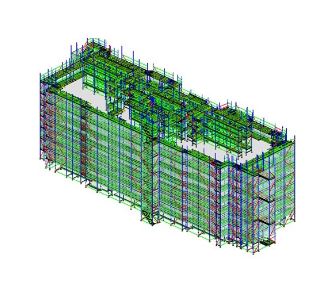
  2. Understanding BIM in Scaffolding Installation

    Comments Off on Understanding BIM in Scaffolding Installation

    When you’re visualizing a construction project, everything may just fit together according to your plan. But, with time, Building Information Modeling (BIM) has truly transformed the ways in which construction projects can be executed. Risks related to safety can certainly be reduced through the 3D models and detailed simulations. In contrast, if the team erects the scaffold soon after it is presented on paper, then workers will certainly be worried about safety. So, in this article, we will cover more about BIM in scaffolding

    What is BIM? A Quick Overview

    Building Information Modeling (BIM) is known to be a technology that enables professionals to create a 3D model. Moreover, when you go through the salient features of an advanced BIM software, it includes the costs related to construction sequencing. Individuals can also manage documents and collaborate with one another across the project’s lifecycle. Once everyone is involved in how the site or structure will look, then it can help teams in numerous ways. Besides exploring design options, the software is capable of developing visualizations. Improvements can further be made when the digital versions are in place. 

    If you have not understood what a BIM is all about, then take a look at the following image. 

    What is BIM? A Quick Overview

    The Role of BIM in Scaffolding Installation 

    While you and your team members are creating a 3D model, it can play a significant role in scaffolding installation. A virtual model can serve as a blueprint to figure out an efficient way of constructing the scaffold. Centralized data management, on the other hand, can help to improve planning and reduce errors. BIM can further help to find out safety hazards and analyze them. Most importantly, diverse teams can collaborate to improve the model using a common interface or an environment. 

    Benefits of BIM in Scaffolding Installation 

    Building Information Modeling (BIM) offers many benefits when a scaffold has to be installed. The model enhances safety and collaboration and makes the implementation process smoother. So, let’s check out the benefits of using BIM.

    Improves Design Accuracy
    BIM enables professionals to develop a highly detailed scaffolding model. People gather together to create such models before the workers commence with installation. This reduces the risk of errors in dimensions. A visual representation also ensures that the scaffold is installed within the intended space.

    Helps to plan and schedule efficiently
    With BIM, workers can align the  planning of installation with the project timeline. The individuals can also keep track of materials needed for the temporary structure. Moreover, they can order the right quantity of material and reduce waste.

    Aids to manage associated costs
    Once the model is presented, it helps to estimate the costs upfront. This can further mitigate bearing unexpected costs with precise budget forecasts. Post optimizing the installation process, BIM can also help in reducing use of materials. 

    Real-Time Updates
    If any alterations are made in the scaffold’s design, then they can be updated instantly in the model. This reduces confusion when all parties can glimpse through the latest information and the same type of data.

    Mitigates Risks
    Soon after viewing the 3D model from different angles, professionals can identify the issues and resolve them. This, in turn, can minimize structural failures when scaffold maintenance is carried out. 

    How does BIM Facilitate Collaboration in Scaffolding Projects? 

    When a BIM plan is implemented, it can facilitate collaboration in scaffolding projects through a centralized platform. Once the digital version of the scaffolding project is ready, professionals can collectively discuss and make modifications. This can eliminate conflict in thoughts that may arise during the construction phases. As the 3D model can be shared, everyone can comprehend the design at their own pace. Thus, the model can help enhance cooperation and enhance the project’s quality. While viewing the model, individuals can also make modifications in real-time and notify others. On-site conflicts can thereby be reduced when the changes are informed in advance.

    Steps to Implement BIM in Your Scaffolding Projects

    When a BIM has to be implemented, it can be a bit overwhelming. But, the entire process will be smooth when you follow certain steps. 

    Define your goals
    Before you implement BIM in scaffolding projects, you have to first define your goals. While you figure out the purpose of developing a model, you must know what you want to accomplish. This can reduce errors and enhance efficiency when the project is executed. 

    Form an implementation team
    Next, you have to form a team of experienced professionals to implement BIM. These can include contractors, engineers, and BIM specialists. But, before choosing them, you must ensure that they have the skills to implement the technology. 

    Develop a plan
    Moving ahead, you will need to prepare a document that represents the details of the implementation plan. Such a plan must cover the scope, standards, and goals in detail. It should also include the software that will be used for developing the model. 

    Spend time training the team
    Even before you start implementing BIM, it’s important to train the team. As you make everyone familiar with the software, the professionals must also know how to use it effectively. In addition, the training must cover more about the software and hardware requirements. 

    After following the above process, you must test the software by starting with small-scale projects. As everyone is confident in using the software, professionals can start creating models of what needs to be erected in reality. 

    Future Trends: The Evolution of BIM in Scaffolding 

    With time, the evolution of BIM in scaffolding is soon going to transform the construction domain. Augmented Reality (AR) will enhance the visualization of the scaffolding designs. But, when training has to be delivered to the entire crew, Virtual Reality and simulations can help teams practice procedures related to disassembly and assembly. Organizations will also embrace cloud-based platforms for effective real-time collaboration. Way ahead, advanced BIM tools will also be used to estimate the amount of materials that are needed. This will help generate the procurement list with the necessary components. 

    Conclusion: Embracing BIM for Safer and Smarter Scaffolding

    Finally, we suggest you implement BIM to figure out how you can develop a scaffold that will be safe to use. Once teams can visualize the 3D model, it can help to find out issues and evaluate structural integrity. You can also minimize risks during the assembling phase and find out how the scaffold can interfere with other components. Scaffold inspection can also be conducted with the integration of BIM.  

    If you’re still seeking supreme-quality scaffolding parts in the USA, then why not choose Scaffolds Supply? As you browse through the components on our official website, we assure you that you’ll seek the right parts for the scaffold. These are also designed by our team with safety standards in mind. 

  3. Scaffold Dismantling Best Practices: Ensuring Safety and Efficiency

    Comments Off on Scaffold Dismantling Best Practices: Ensuring Safety and Efficiency

    For many years, many individuals have ensured safety when erecting scaffolding. But, during the dissembling phase, they often don’t focus on safe steps. The truth is that when the removal is executed, it has to be done with utmost care. In case best practices are neglected, then it can lead to serious accidents. So, let’s check this article to know more about best practices for scaffolding dismantling. 

    Key Safety Considerations in Scaffolding Dismantling

    When workers are dismantling a scaffold, safety is always a concern. In case there are sudden accidents, then it may lead to injuries. Moreover, the contractor has to deal with financial issues. But, there are some ways you can ensure safety.

    Use Proper Safety Equipment (PPE)
    Before disassembling the scaffold, workers must use suitable PPE. This involves wearing helmets, safety goggles, and gloves. Once worn, workers can be protected against hazards and falling debris. 

    Clear Work Area
    To mitigate risks during dismantling, workers should clear the area below the structure. Materials should also not be stacked on the scaffold. Instead, it should be kept on the ground right away. 

    Remove components carefully
    While removing scaffolding parts, nobody should drop them. Components like planks, couplers, and scaffold boards have to be passed down. Alternatively, the workers can use a rope system to lower these parts. 

    Sequence of Dismantling
    Workers must also perform scaffolding dismantling in a particular sequence. They should first remove the components right at the top. Subsequently, they should carry out the tasks in the downward direction. 

    Be cautious with rusted parts
    During the scaffolding dismantling process, workers have to remove rusted components carefully. If it’s required, they must use tools to remove such parts. Parts that offer edge protection should also be removed at the last stage. 

    Step-by-Step Guide to Scaffolding Dismantling

    While workers are disassembling the scaffold, there are some steps to follow. But, before disassembling, it’s important to conduct an inspection.

    Step 1: Initially, workers have to clear the space to keep the various parts. Once the scaffold parts are removed, they should be kept aside. There should also be a route for transportation of components. 

    Step 2: While everything is in progress, the workers must put on safety gear. These include gloves, helmets, and other equipment. However, the use of PPE can vary based on the construction project.

    Step 3: Now, you have to follow the top-to-bottom approach. This means that the workers have to remove the topmost components first. They initially have to remove safety railings and tubes and then move ahead with the deck. 

    Step 4: When the workers are busy with scaffolding dismantling, they must ensure stability. Thus, the anchors have to be removed only when the structure is dismantled. 

    Step 5: Post dismantling everything, the workers have to inspect the parts. If the part can’t be repaired, then it should be disposed of. But, those that are in good condition, should be stored separately. 

    You can also read our blog related to “How to Set-up Scaffolds”. Visit our blog now to get more insights about how to set up scaffolding safely.

    Common Mistakes in Scaffolding Dismantling and How to Avoid Them

    Many workers may not be perfect in dismantling the scaffold. They are likely to commit mistakes at some point in time. Let’s now check the mistakes and how you can avoid them.

    Overloading
    People can exceed the load limit of a scaffold while dismantling. Hence, while working, they shouldn’t remove too many components. This can impact the stability of the scaffold. The individuals should also dismantle the section one after the other.

    Ignoring inspection
    Failing to assess the stability of scaffolds can lead to many consequences. So, before dismantling, workers have to conduct a thorough inspection. They will then be able to identify the hazards before proceeding ahead. 

    Improper Removal
    Individuals may remove the parts in any manner. This can make the entire structure unstable. Thus, it’s better to follow a particular sequence for dismantling to mitigate instability. A certain approach can also prevent accidents during scaffolding dismantling.  

    Neglecting surrounding hazards
    Workers at the site may forget to evaluate the surrounding region. They also don’t observe the power lines and keep an eye on pedestrian traffic. Therefore, it’s necessary to conduct a site assessment so that risks are minimized.  

    Eventually, workers may tend to use the wrong tools. Hence, everybody has to ensure that they are using the right tools. Adequate training also has to be given for proper use of the tools. 

    Scaffold Solutions for Reducing Environmental Impact in Dismantling

    Several solutions can mitigate the environmental impact of scaffold dismantling. Here’s what you can consider at the site.

    Consider modular scaffolds
    When you consider modular scaffolding, these can be reused. The entire team can disassemble the structure and reconfigure as per the needs. Besides, these scaffolds are easier to maintain and are durable. 

    Use sustainable materials
    To reduce the environmental impact, you can use recycled materials. Bamboo is also a renewable resource, apart from other materials. But, the team can use an aluminum scaffold because the parts are easy to carry.

    Embrace Digital Tools
    By using a certain software, workers can plan and manage the use of scaffolds. This is beneficial because it enhances accuracy in material estimation. As a result, the tools help to reduce excess waste and optimize resource utilization. 

    In the end, you should consider designs that integrate access solutions. These reduce the need for extensive scaffolding for construction tasks. Therefore, it minimizes material use and the environmental impact. 

    Conclusion

    Finally, workers have to adhere to a procedure for scaffolding erection and dismantling. Once they implement the right techniques, construction companies can ensure a secure environment. But, to lay down the foundation, they need high quality components. At Scaffolds Supply, we design the structure with a focus on safety. You will not perceive a compromise in quality, as we are the leading scaffolding parts distributors in Texas.

  4. Eco-Friendly Scaffolding Solutions: Sustainable Practices in the Industry

    Comments Off on Eco-Friendly Scaffolding Solutions: Sustainable Practices in the Industry

    In the era of sustainable living, many construction companies are adopting eco-friendly practices. Among the most important components, scaffolds play a role in the future ahead. But, do you know about the sustainable practices prevalent in the industry? Scroll through this article to know more about sustainable practices and scaffold solutions. 

    Environmental Impact of Traditional Scaffolding

    There are many factors that can cause the environmental impact of traditional scaffolding. These are associated with the use of the structure, and the materials. Here’s how the scaffold can affect the environment. 

    Use and Production
    While producing scaffolding components, materials like aluminum and steel are used. These are sourced through drilling, and mining. Thus, when activities are carried out, it leads to pollution and gas emissions. During the production of wood scaffolding, deforestation can affect the environment. However, many people are working towards recycling the materials to mitigate the impact. On the other hand, when scaffolds are used, they affect the region due to energy consumption. While the site needs energy for cooling, and lighting, the production phase also uses energy.  

    Waste Generation
    If worn-out components are not handled properly, then it can significantly affect the environment. For instance, workers have to dispose of wooden boards carefully. In case they come in contact with air, then they tend to rot. Decomposition of woon can also emit certain gasses. However, when aluminum and steel scaffolds are used, they can be recycled. Proper disposal can reduce waste and prevent the environment from ruining. 

    Resource depletion
    As the construction project commences, people are going to extract raw materials. These include gravel and sand, used for concrete production. So, when there’s an ongoing demand for concrete, you can expect resource depletion. Additionally, there would be soil erosion and habitat destruction. In fact, the region would surely get ruined. This is because it will not appear as it was in the past. 

    Ultimately, just imagine that the project is progressing near an inhabited area. In such a case, erecting a scaffold can disturb the local ecosystem. Flora and fauna may also get affected due to the construction activities. So, it’s vital to think about sustainable scaffold solutions. 

    Temporary vs. Permanent Scaffolding: What’s the Difference?

    While workers need a stable structure, they may opt for permanent or temporary scaffolds. As the name implies, temporary scaffolding is a structure that’s erected for a short period. These are often designed in a way that workers can assemble or dismantle them with ease. The scaffolds also offer flexibility to conduct tasks like setting up window panes, or painting walls. But, a permanent scaffold is used for a long time, and it’s integrated into a structure. These are useful when workers have to access areas for inspections and maintenance. Even though it can involve a high investment, people always prefer these. They no longer have to spend time in repetitive scaffold setups. Nevertheless, choosing among scaffolding systems will depend on the project’s duration, requirements, and budget. 

    Key Features of Sustainable Scaffold Solutions

    There are various features of sustainable scaffold solutions. These help in minimizing environmental impact while maintaining safety. Let’s check these out in detail.

    Recycled Materials
    Utilization of recycled material is surely a great way to move ahead with sustainability. Manufacturers may first prefer using materials like steel and aluminum. But, with recycled materials, companies can design eco-friendly scaffolds. These reduce carbon emissions and conserve naturally existing resources. This trend is prevalent in manufacturing of green scaffolding systems.

    Modular Design
    When builders consider a modular scaffold, it boosts efficiency and reduces material waste. These systems have components that can be interchanged. Workers can also reuse the scaffold with different configurations. Once the construction process is streamlined, they will reduce environmental impact. This, in turn, saves considerable time and resources. 

    Biodegradable Components
    Use of biodegradable parts is yet another feature of sustainable scaffolding solutions. These are certainly a better alternative to usual materials. For instance, some companies may produce straps, and nets using plastic among the scaffolding materials. Once these are used often, they will decompose without affecting anything. So, such parts reduce the effect on the environment even when they are not in use. 

    Energy-Efficient Manufacturing
    With energy-efficient production phases, companies are now able to reduce the carbon footprint. By using wind or solar energy, factories are also able to alter the manufacturing techniques. This considerably reduces emissions as well as waste formation. The current sustainable practices are also protecting and conserving the outdoor atmosphere.  

    Lifecycle assessment programs
    As companies strive to focus on sustainability, lifecycle evaluation programs are thought of. Such a feature of sustainable scaffold solutions is executed with an aim to assess the impact of scaffold systems. Organizations are running such programs right from the start of production. Primarily, they are analyzing different phases like material sourcing, and disposal along with the prime production phase. After comprehending the phases, they can now reduce waste and preserve resources. 

    Conclusion

    Finally, sustainable scaffold solutions promise you a road to construction practices, friendly to the environment. Companies can make a difference by using modular designs, and pacing ahead with energy-efficient manufacturing processes. As people refine their focus on sustainability, eco-friendly scaffold solutions will transform the future. 

     Still seeking the most reliable scaffold equipment supplier? Choose Scaffolds Supply, which has always maintained quality and catered to diverse industries. Once you glimpse through our online store, you can check out a range of scaffolding components. 

  5. Temporary vs. Permanent Scaffolding: When to Use Each?

    Comments Off on Temporary vs. Permanent Scaffolding: When to Use Each?

    When a construction project is in progress, scaffolding is a structure that you will observe. Such a structure not only offers a stable platform but also support for diverse workers. Nets and sheets are also laid to prevent tools from falling. But, there are two types of scaffolds that are commonly used. These are temporary and permanent scaffolds. So, in this article, let’s check out more about these scaffolding structures. We will also focus on the differences between temporary vs. permanent scaffolding. 

    What Is Temporary Scaffolding?

    A temporary scaffold is a structure that’s erected temporarily. This structure is usually made from metallic poles and wooden planks. While the structure offers a stable platform, it offers requisite support to workers, and to those who conduct inspections. But, in the modern era, scaffolds have developed beyond the past versions. They are now available in various designs made from diverse materials. Now, let’s check out when industries use temporary scaffolding.  

    • When workers need to gain access to building facades, and roofs, then the builder will think about a temporary scaffold.
    • Temporary scaffolding is suitable when individuals have to perform maintenance tasks. These tasks may be associated with the existing infrastructure, bridges, and buildings.
    • In the case of renovations, temporary scaffolds are useful for painting tall buildings. The scaffolding structure also enables workers to carry out construction tasks on complex surfaces.
    • By offering a stable platform, these scaffolds help workers to restore the visual appeal of monuments. They can carry out work meticulously as they move from one area to the other.

    Apart from the applications stated above, these scaffolds also help to set up billboards next to the building’s exterior walls. 

    What Is Permanent Scaffolding? 

    Most of the time, workers have to carry out construction tasks with agility. But, when the entire crew is looking to access awkward heights, permanent scaffolds are used. Moreover, a permanent scaffold can be integrated into buildings for ongoing maintenance. As these facilitate regular maintenance, they no longer have to be set up repetitively. Now, let’s go through the applications of permanent scaffolding.  

    • Permanent scaffolds are used in chemical plants when it’s tough to set up staircases
    • When old structures have to be demolished, permanent scaffolds offer support. This is because workers have to carry out plenty of tasks for destroying the entire building. 
    • Such types of scaffolds are used when the development of a construction site is stopped. This is likely to occur due to some issues
    • When it’s required to access advertising banners, these scaffolds can be an ideal option. Workers may have a tough time even when customized staircases are set up
    • Permanent scaffolds are used for supporting a semi-permanent structure. Once integrated, these offer reliable access to elevated areas. 

    Key Differences Between Temporary vs. Permanent Scaffolding

    Now let’s check how a permanent scaffold differs from a temporary one.

    Temporary Scaffolds Permanent Scaffolds
    Short-term, used for specific projects Long-term, integrated into the structure
    Can be assembled and disassembled  Built into the building, remains in place
    The components are often made from lightweight materials Typically constructed from durable materials like steel or aluminum
    Provides access for construction, maintenance, or repair tasks Enables workers to carry out ongoing maintenance and inspection tasks
    Highly adaptable to various project requirements Fixed design, tailored to specific areas
    Generally lower initial cost, but may require multiple setups Higher upfront investment, but cost-effective for long-term use
    Quick to set up and disassemble Requires more time and planning for installation

    You can also read about “What are the different types of scaffold towers?”. In this blog we have covered the importance of using scaffold towers and variants available at Scaffolds Supply

    Temporary vs. Permanent Scaffolding: Which One Is Right for Your Project?

    When you have to decide between the types of scaffolds, you have to consider the project’s duration. Usually, you can think about a temporary scaffold for short-term tasks. These are carried out when a building is undergoing repairs. You can also access different levels without a permanent scaffold setup. On the other hand, a permanent scaffold is suitable for projects that need ongoing maintenance. Even when you have to make a high initial investment, it can assure safety. Ultimately, the choice depends on the budget, and the frequency of access. 

    Cost Considerations for Temporary vs. Permanent Scaffolding

    While you consider a scaffold, you have to consider many things for the cost of scaffolding

    Initial Costs
    If you’re about to install a temporary structure, then the initial costs are low. These can also vary depending on the materials, and the duration of use. But, the overall cost can increase significantly, due to the installation costs of a permanent scaffold.

    Labor Costs
    Labor costs can be significant when the temporary scaffold has to be set up and taken down frequently. But, with a permanent scaffold, the builder has to bear only one-time costs. This cost is associated with the installation of the structure. 

    Repairs & Maintenance
    Maintenance costs are usually lower because the structure is used for a short time span. But, with a permanent scaffold structure, the team has to consider ongoing maintenance costs. 

    Duration of Use
    Temporary scaffolds are quite cost-effective for short-term projects. If the project timeline extends, then the costs can increase. Permanent scaffolds, on the other hand, are cost-effective for long-term projects. 

    Conclusion 

    In conclusion, it’s essential to understand the difference between both scaffolds. This will help you make an informed decision when the project is progressing. Temporary scaffolds are suitable for short-term tasks that need flexibility. 

    In contrast, permanent scaffolds offer stability for the long term. But, after evaluating the requirements, you can choose a suitable scaffold. Eventually, the right choice should support the workflow and ensure the well-being of workers.

    If you’re seeking a scaffold for a project, you can buy scaffolding components online. You can simply go through the inventory showcased by the leading scaffolding manufacturers in the USA, Scaffolds Supply. As you choose from a vast inventory, we directly ship these to the job site. 

  6. How is AI changing scaffold inspection?

    Comments Off on How is AI changing scaffold inspection?

    In today’s era, safety at construction sites is always considered important. But, do you know how AI is revolutionizing the approach for inspections? Well, this technology is making the inspection process extremely effective. After a thorough inspection, AI is certainly ensuring structural integrity. So, in this article, you will know how scaffold AI detection is helping to overcome many challenges. 

    Why Should Professionals Conduct Scaffold Inspections?

    As scaffolds offer support to workers for construction activities, it’s essential to conduct inspections. Apart from ensuring safety, regular inspections can help to stay compliant. This mitigates the risks of legal liabilities. By inspecting the entire structure, companies also make sure that construction methods meet certain standards. Identifying wear and tear of components is also why workers conduct inspections. Thus, they can carry out timely repairs and minimize costly downtimes. Routine checks can further track hazards and thereby prevent accidents. 

    What Challenges May Arise With The Usual Approach?

    Professionals may encounter many inspection challenges. Let’s now check out these issues.

    Human Error
    People are bound to make mistakes while inspecting scaffolds. These errors may occur due to lack of experience. Therefore, some issues may not be addressed after an inspection. 

    Time Constraints
    Most of the time, inspections can be quite time-consuming. So, professionals may do everything hastily and overlook safety checks. Here’s when a scaffold AI detection approach can be helpful. 

    Training Gaps
    Every professional who qualifies for scaffolding inspections may not have undergone the same kind of training. Thus, it can impact the quality of work and the extent to which scaffolds are inspected.

    Limited Accessibility
    Some scaffolding structures are tough to inspect. This is because professionals are unable to inspect hard-to-access areas. So, it becomes challenging to inspect all the components thoroughly. 

    Now, with time, workers are following an approach for scaffold AI detection. Let’s further check how the technology can enhance scaffold safety. 

    A New Inspection Dimension using AI

    As professionals embrace AI, it can certainly bring a fundamental change in the conventional approach. Professionals can ensure safety when Machine Learning, and data analytics complement AI. They can also process data efficiently and in the most accurate way. You will be amazed with the results when you move ahead with scaffold maintenance. 

    How Does AI Enhance Scaffold Safety?

    Artificial Intelligence (AI) certainly enhances scaffold safety in many ways. Here’s what you can expect once you leverage the technology.

    Image Recognition
    With high-resolution cameras and AI algorithms, it becomes easy to analyze images. Once the camera captures the structure from different angles, the algorithms help to detect defects. These might have occurred due to wear and tear, or damages. Improper assembly can also impact the use of the scaffolding systems

    Predictive Maintenance
    Relentless use of the scaffold can be the main reason for maintenance. But, when AI algorithms perform historical data analysis, it can confirm the need for maintenance. Moreover, the technology can also alert professionals about replacements. This will eventually mitigate accidents after scaffold AI detection.

    Risk Mitigation
    As real estate developers are concerned about safety, AI-driven inspections will be helpful. Once the inspection is in progress, it can detect the defects in real-time. Workers will no longer have to worry about imminent dangers. In fact, a safe environment will be created when there are fewer risks.

    Streamlines Workflow
    Now, just imagine how tedious it can be to enter data related to inspections with time. But, when the inspection is driven by AI, it can eliminate this need. In addition, the technology also optimizes allocation of resources. A detailed view, through a scaffold AI detection approach, can also trace certain defects. These perhaps would have been missed while following the conventional approach. 

    Automated Inspections
    AI-powered drones can truly help in performing regular inspections. As the drone continues to fly high, it can inspect hard-to-access areas. After capturing images, professionals can view them closely and observe defects. They can further decide what has to be done to maintain structural integrity. 

    Besides everything, AI in the construction domain can ensure compliance with safety regulations. While the technology empowers inspections, it can automatically generate reports. Professionals will then be able to ensure whether the standards are met. 

    Conclusion

    Finally, it’s important to understand that scaffold AI detection is going to evolve. So, there’s no other option than conducting extensive training. This will help to harness the power of the technology considerably. After all, you shouldn’t miss conducting AI driven inspections. Checking the scaffold will truly revolutionize site management. You will also perceive a difference in conventional practices once you embrace the change. 

    Are you seeking the best scaffolding suppliers in USA? Well, in that case, why not approach Scaffold Supply? While you focus on safety, our scaffolds are known for supreme quality. As soon as you browse through the online store, you can choose components for diverse scaffolds. 

  7. How to Install Stringers for Stairs?

    Comments Off on How to Install Stringers for Stairs?

    When you’re setting up stairs in or near your house, stringers offer necessary support for treads. Hence, when you plan to install stringers, you have to be precise with the measurements. You also have to follow certain steps for the installation. So, in this article, we have covered the various steps you can consider to install stair stringers

    Steps to Install Stringers for Stairs 

    Setting up stair stringers is the main part of building stairs. These offer a framework for the treads and risers. But, before you proceed any further, you need to have some tools and materials. Among the tools, you need a framing square, a circular saw, screwdriver, and a tape. You will also need a level and a drill before you commence. Additionally, you will also need wooden planks for the treads and the risers. Let’s check the procedure for creating the stringers.

    1. Measure The Total Rise: When you’re measuring the total rise, it’s equal to the height from one level to the other. This refers to the distance between the floor level and the landing area. 
    2. Find Out The Height Of Every Step: Now, you have to determine the height of the steps. The height is usually according to specific standards. Usually, it’s equal to 7 inches or 18 cm. But, you should take care of the headroom before setting the rise or height. Moreover, you should be able to figure out the height properly in case you’re creating stringers for scaffold stairs.  
    3. Calculate The Number Of Steps: Next, you have to find out the number of steps. This can be done by dividing the total rise with the individual height of the step. However, it will be one less than the risers for the treads.
    4. Find Out The Run Per Stair: To find out the run per stair, you have to measure the horizontal distance between the topmost and bottom-most part of the stairs. But, you must ensure that the stairs are inclined at an angle of 40 degrees. The run is often equal to 10 inches for each step. This ensures comfort whenever people are ascending or descending the stairs. Later, you must find the stringer’s length with a calculator. Inaccurate calculations can lead to problems when you are about to install stair stringers. 
    5. Mark The Lines: After the calculations, you initially have to lay the first stair. At those instances, you have to place the framing square on a thick plank. But, before drawing faint lines, make sure the short end denotes the rise measurement. Conversely, the run measurement should be drawn on the long end.
    6. Continue Marking The Cuts: Now that you have figured out the first layout, move the framing square along the plank’s length. Moreover, you have to continue marking the lines on the board. A bit later, you have cut along the lines using a circular saw. While you’re cutting, ensure that the cuts are clean. These will offer better support from the treads. 
    7. Place The Stringers Properly: At this stage, you have to place the top of the stringer against the landing region. You will also have to position the stringer so that it rests at the floor or ground level. Screws must also be used to secure the stringer after it has been placed. But, to ensure stability, you might have to adjust the floor level. 
    8. Install Risers And Treads: Towards the end, you have to cut the risers properly. As you place the risers vertically towards the stringer’s back edge, make sure that they are at the same level. Besides, you have to also place the treads horizontally over the stringers. 

    After you install stair stringers, you have to check for stability. To determine stability, try climbing or descending the steps. In case the stairs need handrails, then you should install them right away. However, the railings must comply with building requirements before continuing.

    Scaffolds Supply for Stairs 

    Scaffolds Supply is always proud of offering stairs that are quite safe to use. While you start using the stairs, you can certainly access the working areas with efficiency. These stairs are sure to last for a long time because they are designed from high-quality steel. 

    Conclusion 

    Finally, before cutting the wooden boards, you should check the measurements again. For better strength, you also need to use some adhesive. In case you’re installing the stringer for the first time, then seek assistance from a professional. Moreover, it’s important to wear gloves and goggles.This can prevent injuries when you plan to install stair stringers.  

  8. Difference Between Handrail and Guardrail

    Comments Off on Difference Between Handrail and Guardrail

    In the construction sector,  many workers are likely to fall from heights or the rooftops. Such unexpected incidents not only cause suffering but also increase the burden for a medical procedure. However, handrails and guardrails can prevent accidents even when the workers are high above the ground. Even when handrails and guardrails appear similar, they serve the main purpose of protecting against falls. Moreover, the requirement for every barrier also varies to a certain extent. So in this article, we shall cover more about handrails and guardrails. 

    What Exactly Is A Guardrail?

    When you observe guardrails, these are vertical barriers that prevent falls due to accidents. Such barriers also make the workers alert in case there is any hazard around the construction area. Besides, the guardrails also prevent certain individuals from entering a few areas. While guardrails are available in diverse styles, they include posts, intermediate rails and top rails. Compared to handrails, guardrails are designed to save lives around platforms, landings or in the presence of hazards. 

    Guardrail – OSHA Height Requirement

    The OSHA standard states that the guardrails must approximately be 42 inches in height. Such type of guardrails should also have a midrail whenever it is needed. However, this standard does not speak about the tolerance for the top rail’s height. When workers have to install the top rail, a tolerance of 3 inches is permitted. Hence, the upper surface of the top rail must be located anywhere between 39 and 45 inches from the floor.

    Guardrail – OSHA Strength Requirement

    The guardrails must withstand a force of at least 200 pounds in terms of strength. It should not get affected when the force is applied in the downward direction. In such a scenario, the rail system should not bend below 39 inches from the floor level.

    What Exactly is a Handrail? 

    While handrails ensure safety, they are not built with the intent of saving lives. Once they are mounted on a wall or a partition, they offer necessary support for visitors or workers who may be disabled. The handrail also offers support when people have trouble walking or they are unable to climb the stairs with ease. Most of the time, handrails are used along with a stairway that comprises three risers. If you wish to know about the components of a stair, then you should refer to a guide. Let’s check out the height requirements as per osha guidelines.

     Handrail – OSHA  Height Requirement

    According to OSHA standards, the standard height of guardrails is 30 inches. On the other hand, the maximum height is equal to 38 inches. The height is measured from the top surface of the handrail to the stairway’s leading edge prior to installation.

    Handrail – OSHA Strength Requirement

    With regards to the strength requirement, the guardrails must sustain a force of at least 200 pounds. This force may be applied in the outward or the downward direction. The guardrail also stays intact when the force is within 2 inches of any point across the handrail’s top edge.

    Importance of OSHA Guidelines in Preventing Injuries

    OSHA regulations are very important in the construction sector. Let’s check the significance of osha regulations for handrails and guardrails. 

     Risk Assessment

    Construction sites present many hazards such as falls, electrocution, and various incidents. Hence, these guidelines require contractors to assess risks and identify potential hazards before commencing work.

    Safety Training

    OSHA makes it necessary that the workers should be trained for dealing with specific hazards. Such training also increases awareness and reduces the likelihood of accidents. 

    Protection Against Falls 

    Falls can be the root causes of injuries in the construction domain. OSHA guidelines include stringent requirements for many systems such as personal fall arrest systems, guardrails, and safety nets. Complying with these guidelines can certainly reduce the risk of falls.

    Conclusion

    In the end, OSHA guidelines include requirements for emergency action plans and evacuation procedures on construction sites. Whenever an emergency strikes, these guidelines help in reducing the severity of injuries and pay attention to the accident that has occurred.

    According to standard 1910.28(b)(15), handrails and guardrails should protect workers when they are working on surfaces 4 feet above the ground level. Besides, all the structures at the construction site should be known for its integrity. In case the structures don’t meet the requirements, then individuals are not allowed to work around the region. Moreover it is essential to secure every fixed stairway.

    In every case, the standards secure the workers while keeping the operation activities running smoothly. Just like rules, safety is a culture that needs to be incorporated. With a safety program in place, workers will also be aware that the management team is taking things seriously.

    Scaffolds Supply  for Guardrails & Gates

    If you are looking for guardrails and gates or scaffold parts, then you can think about getting in touch with Scaffolds Supply. As you check a comprehensive range of guardrails and gates, these ensure accessibility and a secure working platform. While you skim through our products, a guardrail set can also be useful. 

  9. Types of Supported Scaffoldings

    Comments Off on Types of Supported Scaffoldings

    Whenever you come across a construction project, you probably might have seen scaffolds. These are nothing but temporary structures that are built to carry out various tasks. In the past, these structures were made of parts designed from bamboo or wood. But now these scaffolds have metallic parts that are durable. So, in this article, we shall cover more about supported scaffold and its types. 

    What Is A Supported Scaffold?

    As you observe these scaffolds, they are built with additional support at the bottom. These include poles, outriggers, frames, and more. As these rest on the ground level, they come under the supported type of scaffolds.

    Let’s check out the benefits of supported scaffolding and why it is the most preferred choice.

    Benefits Of Supported Scaffolding

    >> Supported scaffolding systems are extremely versatile and can be adapted to suit different maintenance tasks. Workers can also configure them around obstacles and tailor them even when they have to be used for certain project requirements. 

    >> Supported scaffolds offer safe and convenient access to elevated work areas. This allows workers to reach heights that would otherwise be tough or unsafe with ladders. 

    >> Scaffolding structures are designed with safety in mind. With the secure platform in place, workers can prevent sudden accidents and unexpected falls. The scaffolds also provide a stable working environment for diverse individuals.

    >> Supported scaffolds offer a sturdy foundation that enhances productivity. The structure also enables workers to perform tasks efficiently and without any disturbance.

    >> These types of scaffolds can support heavy loads, including the weight of workers. This benefit makes them suitable for a wide range of construction and maintenance projects.

    Now, let’s check the three main types of supported scaffolds.

    What Are The Types Of Supported Scaffolding?

    In the industry, a variety of supported scaffolding types are used. Let’s check out the types one after the other.

    Frame Scaffolds

    Such scaffolds are usually used at construction sites because they are easy to assemble. If you observe such scaffolds, these have a base section that is in contact with the ground. As workers erect the modular design, they can perform tasks at different heights. Therefore, contractors use frame scaffolds when commercial properties have to be constructed.

    Mobile Scaffolds

    Such types of scaffolds are mobile because they have wheels at the bottom. You may observe these scaffolds, when workers are painting the exterior of a building. Moreover, these scaffolds can be kept stationary by locking the wheels. They can also be taken from one location to the other as the wheels move briskly. 

    Wooden Scaffolds 

    When you come across these scaffolds, different poles offer additional support. But, because these scaffolds are built right from scratch, they are not frequently used for the construction of modern buildings. Instead, they offer support for lighter loads when required. People also prefer erecting these scaffolds when other types of structures are not available. 

    Tube and Coupler 

    These scaffolds are constructed from tubes interconnected with coupling devices. Hence, workers prefer using the scaffolds when high load needs to be sustained. Ultimately, these scaffolds can be versatile because they can be assembled with different configurations. But, workers have to ensure that the scaffold is assembled properly before its use. 

    Ladder Jack 

    When workers construct these supported scaffolds, they rest the platform on different brackets connected to a ladder. This makes them quite useful when the structure has to be moved to different locations. So, many contractors use this scaffolding for projects and sustaining lower weight.

    Eventually, under the types of supported scaffolds, you will observe a pumpjack, which is similar to a moveable platform standing on vertical poles. These are easy to install and can be customized as per the project needs. Contractors find this option affordable when they are thinking about a moving platform scaffold.

    Conclusion

    On a concluding note, specialty scaffolds like chicken ladders and horse scaffolds can be used for a certain purpose. For example, chicken ladders offer stability when tasks have to be carried out to maintain the roof. On the other hand, ladders and saw horses can offer an elevation or a lift to reach certain heights. 

    Do you have a construction project in mind but you don’t know which scaffold to use? Get in touch with Scaffolds Supply today to know about which scaffold is suitable for your project.

  10. Top 5 Essential Scaffold Tools for Safe Construction

    Comments Off on Top 5 Essential Scaffold Tools for Safe Construction

    When workers are working at a construction site, scaffolding always offers stability. But, to carry out the tasks in the best possible way, workers have to use suitable and right tools. In case they don’t use the right tools, then they will not be able to perform well. So, in this article, we will cover scaffold tools that are required for a construction project. This article will also cover the function of every tool and how it can ensure safe operations.

    You can also read our blog related to “Understand what scaffolding is, the most important key points regarding scaffolding.”

    What are the Scaffold Tools Workers Must Consider? 

    When using scaffolding, workers need to use many tools. Here are some of the tools that they should consider.

    Top Scaffold Tools List:

    1.  Scaffold Wrenches:

    These are tools used during the scaffolding’s assembly and disassembly. While workers use such tools, they can either loosen or tighten bolts. If you come across a scaffold wrench, then the design allows you to hold it firmly. However, such tools may vary in shape and have adjustable jaws. These are useful when workers have to deal with different bolts. In the end, the overall design offers the required torque to make connections tight. 

    2. Pliers

    Pliers are usually multipurpose scaffolder tools. While workers use such tools, they can twist wires, and cut different materials. Workers should always carry this tool when scaffolding has to be dismantled or assembled. Moreover, some pliers have sharp edges for cutting ropes or straps. Certain types may also have adjustable jaws to deal with different types of fasteners. Once workers use the pliers, they can make the assembly process smoother than ever before.

    3. Lanyards & Safety Harnesses

    In the construction domain, lanyards and safety harnesses are the most important scaffold tools. When workers use safety harnesses, it secures them at a particular point. These usually have straps which enable workers to wrap them around. Harnesses reduce the chances of injury due to its design. Now, when you observe a lanyard, it’s a flexible line that connects the harness to the anchor point. But, before considering lanyards, ensure that they are strong and have the capacity of absorbing shocks.

    4. Scaffold Spanners

    Just like wrenches, scaffold spanners refer to tools that are used for making fittings tight. While these have an open-ended design, they can be adjusted for different bolt sizes. The ergonomic design also offers comfort while holding the scaffold spanners. But, for more efficiency, workers must consider spanners with long handles. Durability is also something that workers should consider to withstand forces.

    5. Scaffold Ratchets

    When workers are concerned about safety, they should use ratchets among scaffold tools. Such tools also have a certain mechanism that enables workers to tighten or loosen fittings quickly. They don’t have to apply any pressure to remove the tool from the fastener. Once they continue to use the ratchets, they can ensure stability during the construction phase. Most of the time, these tools are made of robust materials that can make them last long even after frequent use.  

    Beyond the above scaffolder tools, workers can use claw hammers to drive nails in wooden scaffolding parts. They can also use this tool for removing nails while disassembling the structure. Conversely, levels ensure that the scaffolding structure is aligned. Accomplishing alignments is important to maintain stability once the scaffolding is erected. Workers may also use tapes to measure distances for precise positioning of platforms. However, before using a tape, ensure that the measurements are clearly visible.  

    Discover a wide range of scaffolding materials, from traditional wood and steel to cutting-edge aluminum and plastic solutions.

    Conclusion

    Finally, workers shouldn’t forget about using protective equipment. These will keep them safe from unexpected accidents. Apart from a hard and sturdy hat, workers should use high visibility jackets and boots with a metal part at the end. Besides, if the workers are working within a noisy environment, then they should use something to protect their ears. Wearing a good quality tool belt will also help to keep the scaffold tools within the worker’s reach.

    About Scaffold Supply 

    If you’re planning for a construction project, then why not approach Scaffolds Supply for quality products? In case you want to set up scaffolds within less time, then we can offer you ringlock system scaffolds. Additionally, we also sell scaffold parts for refineries, construction companies, and rental outfits. Ultimately, we offer remarkable services and ensure quality for every scaffolding component.