


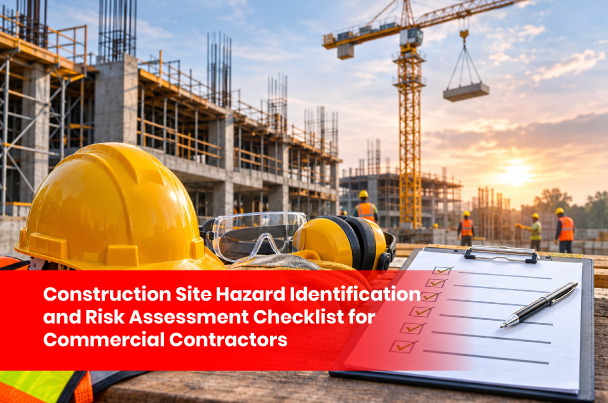
Falls from heights, electrical exposure, moving machinery, unstable scaffolding, falling objects, unsafe working conditions. These are the construction site hazards commercial contractors deal with all the time. Spot them before work starts and you prevent injuries, cut down on project interruptions, and keep the site safer for everyone on it.
A good construction site safety checklist needs some structure. It should cover working platforms, access systems, personal protective equipment (PPE), machinery, electrical installations and emergency procedures. When work happens at height, there’s one more job on the list: inspect the scaffolding guardrails and gates to make sure the right fall protection components are in place and installed correctly.
Below, we walk through the common construction hazards, the inspection points that matter in practice, and the steps to follow when you carry out a construction risk assessment.
What Are the Most Common Construction Site Hazards?
On a commercial construction site, you’ve got lots of workers, heavy equipment and elevated platforms. And the working conditions keep shifting.
The hazards that come up most often include:
- Falls from heights: Platforms with no protection, open edges, and ladders that aren’t safe.
- Falling objects: Anything that can drop from above. Tools, materials, bits of debris.
- Electrical hazards: Exposed wiring and damaged cables are the usual culprits, along with overhead power lines.
- Equipment-related hazards: Machines moving around site, vehicles colliding, and equipment that breaks down.
- Scaffolding hazards: Shaky foundations, braces that have gone missing, components that have taken damage.
- Slip and trip hazards: Uneven surfaces and loose debris, plus walkways nobody has maintained.
- Chemical exposure: Dust, fumes, solvents, and hazardous construction materials.
- Excavation hazards: Trenches collapsing, underground utilities, and soil that won’t hold.
Catch these hazards early, and contractors have time to put the right control measures in place before anyone starts high-risk work.
Construction Site Safety Checklist for Commercial Contractors
A site safety inspection looks at three things: the working environment, what condition the equipment is in, and the work planned for the day.
Run through the checklist below to pick out potential hazards.
1. Fall Protection and Working at Heights
Falls are a big worry on commercial construction projects. The risk goes up during structural work, roofing and scaffolding operations.
What to look at:
- Are the required guardrails and fall protection systems actually installed?
- Personal fall arrest equipment should be checked every time, before it’s used.
- Working platforms: stable, and secured the way they should be.
- Ladders and access points. Any damage?
- Floor openings and exposed edges need protecting, so confirm they are.
And whatever fall protection you use, it has to satisfy the OSHA requirements covering that particular activity and its equipment.
2. Scaffolding and Temporary Structures
Scaffolding systems need regular inspection. A damaged component, or one that’s been put together wrong, can quickly become a serious safety risk.
On the scaffold itself, run through these points:
- Foundations. Are they stable, with proper support underneath?
- All frames, braces and connections should be secure.
- Platforms need full decking and no visible damage.
- Guardrails and access systems in the right spots.
- The scaffold isn’t loaded past its permitted limits.
- No one has altered it without authorization.
Scaffold planks need regular attention too. Look for visible defects, improper support and signs of deterioration.
OSHA 29 CFR 1926.451(f)(3) is specific on this point. Under that rule, a competent person has to check scaffolds and their components for visible defects before every work shift begins. They need to check again after anything happens that could affect structural integrity.
3. Electrical Safety
Where do electrical hazards come from? Usually temporary power installations, equipment connections, or utility lines close to the work area.
Things to check:
- Cables: any cuts, any exposed wiring?
- Ground-fault protection should be there, and it needs to be the appropriate kind.
- Stay back from overhead electrical lines by at least the required clearance.
- Electrical panels and connections need to be protected. Check that they are.
- Take damaged electrical equipment out of service.
Any electrical work that calls for specialized knowledge or authorization should be left to properly qualified personnel.
4. Heavy Equipment and Material Handling
Cranes, forklifts, lifting equipment and construction vehicles show up on commercial projects all the time.
Before work starts, confirm the following:
- Equipment has had its required inspections.
- Every operator is properly trained and qualified.
- Lifting accessories are right for the lift, and they’ve been inspected.
- People on foot and moving vehicles use separate routes.
- Stored materials can’t topple over or shift around.
Lifting and material handling bring their own risks, so assess the equipment-related hazards before those operations begin.
5. PPE, Housekeeping, and Emergency Preparedness
Then there’s personal protective equipment and housekeeping. Both give workers extra protection from the hazards they run into every day.
A quick walk-round should confirm:
- Everyone’s wearing helmets, gloves, footwear and eye protection that fit the task.
- Walkways aren’t cluttered with debris or blocked.
- Fire extinguishers and emergency equipment can be reached easily.
- Emergency exits and assembly areas are marked so people can find them.
- First-aid supplies and emergency contact details are on hand.
PPE works alongside your other hazard controls. It shouldn’t be used to replace safer work methods.
How to Conduct a Construction Risk Assessment
A construction risk assessment shows contractors which hazards need attention right away, and which preventive measures to put in place.
Step 1: Identify the Hazard
Walk the work area and go over the activities planned.
Factor in equipment condition, how workers get access, environmental exposure, and the way different contractors’ work might overlap.
Step 2: Evaluate Likelihood and Severity
Ask two questions. How likely is an incident? And how serious could the consequences be?
A simple risk matrix helps keep those decisions consistent.
| Risk Level | Example | Recommended Response |
| High | Unprotected elevated platform | Restrict access and correct before work |
| Medium | Material storage obstructing a walkway | Apply controls before exposure continues |
| Low | Minor housekeeping issue with limited exposure | Correct and monitor |
These risk levels are only examples. Real ratings depend on site conditions, exposure and the potential consequences.
Step 3: Implement Control Measures
Work through the hierarchy of controls when you pick preventive actions:
- Eliminate the hazard wherever you can.
- Substitute safer equipment or methods.
- Put engineering controls in place.
- Bring in administrative controls and safe work procedures.
- Issue the right PPE.
Match each control to the nature and severity of the hazard.
Step 4: Review and Update the Assessment
An assessment isn’t a one-off. Redo yours when construction activities change or new equipment arrives. The same goes for after an incident, or when environmental conditions add new risks.
How Should Contractors Document Site Safety Inspections?
A site safety inspection record does three jobs. It tracks hazards, assigns corrective actions, and lets you confirm that unsafe conditions really were fixed.
| Inspection Detail | Information to Record |
| Project information | Site name, location, and inspection date |
| Inspector | Name and responsible position |
| Hazard identified | Description and location |
| Risk rating | Likelihood, severity, and priority |
| Corrective action | Required control or repair |
| Responsibility | Assigned person or contractor |
| Completion status | Open, in progress, or closed |
| Verification | Follow-up inspection and approval |
Digital or paper checklists both work. Go with whichever the project requires.
Keep inspection records for as long as applicable regulations, company policies and contractual obligations say you must.
When Should Construction Site Safety Inspections Be Conducted?
Commercial contractors should build inspection schedules around project activities, site conditions and the regulations that apply.
Key times to inspect include:
- Before any high-risk construction activity starts.
- At set intervals through the life of the project.
- After major weather events or equipment incidents.
- When new machinery or temporary structures come onto site.
- After accidents, near misses or reported hazards.
- Any time work conditions or construction methods change.
Some equipment, scaffolds included, has its own mandatory inspection frequencies on top of this.
Conclusion
If you want commercial construction operations to run safely and efficiently, identifying construction site hazards is essential.
With a structured construction site safety checklist, contractors can inspect working platforms, equipment, electrical installations and general site conditions before a hazard turns into an incident.
Add regular construction risk assessment, clear documentation and corrective actions that happen on time, and safety management gets stronger across even complex projects.
For contractors working at heights, two steps matter a lot: choosing reliable scaffolding equipment and components, and keeping proper inspection procedures in place. Both move you toward safer construction operations.