


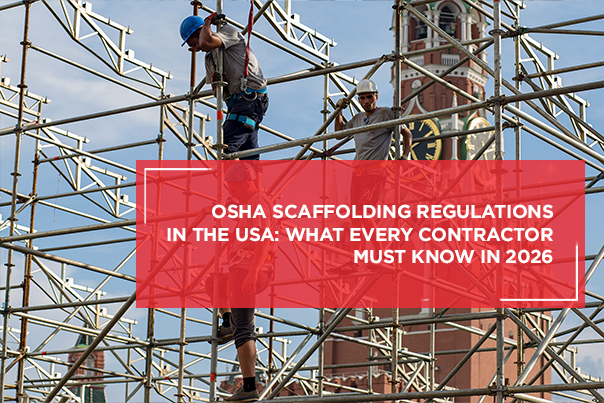
For building projects, scaffolding systems are very important since they make sure that workers have safe places to work. Still, accidents involving scaffolding are still one of the most common ways that people get hurt on the job in the construction business. The Occupational Safety and Health Administration (OSHA) has set strict safety rules for the design, installation, and usage of scaffolding systems to lower the dangers.
As of 2026, contractors must follow OSHA’s scaffolding rules included in 29 CFR 1926 Subpart L. These standards cover things like how much weight a scaffold may hold, how to safeguard workers from falling, how to make sure the structure is stable, and how to inspect it.
This article tells contractors what the most critical OSHA scaffolding safety rules are so they may stay in compliance and keep workers safe on construction sites.
Overview of OSHA Scaffolding Regulations
29 CFR 1926.451 sets the minimum safety standards for supported and suspended scaffolds used in construction. OSHA enforces these standards.
These rules are mostly about a few important things:
- The load capacity of a scaffold
- Standards for building platforms
- Systems for fall safety and guardrails
- Safety for workers and ladders
- Requirements for inspecting scaffolding
The purpose of these rules is to make sure that scaffolding stays sturdy while workers work at high heights.
Scaffold Structure and Safety Components
A safe scaffolding structure has many parts that work together to keep the structure from failing and workers from falling.
Main Scaffold Safety Components
| Component | Purpose |
| Standards | Provide vertical structural support |
| Ledgers | Connect standards horizontally |
| Transoms | Support working platforms |
| Guardrails | Prevent workers from falling |
| Toe Boards | Prevent tools or materials from falling |
| Base Plates | Distribute scaffold load on ground |
To keep the structure stable and the workers safe, each part must be put together correctly.
OSHA Scaffold Load Capacity Requirements
One of the most important OSHA rules about scaffolding is about how much weight it can hold.
OSHA Load Rule
Every scaffold and part of a scaffold must be able to hold at least four times the maximum load that is supposed to be put on it.
- This load has:
- Weight of the worker
- Tools and gear
- Materials for building
- Environmental burdens
Typical Scaffold Load Ratings
| Scaffold Type | Load Capacity | Typical Application |
| Light Duty | 120 kg/m² | Painting and maintenance |
| Medium Duty | 240 kg/m² | Masonry work |
| Heavy Duty | 450 kg/m² or more | Industrial construction |
Making sure that the load capacity is right keeps the structure from falling down and makes the job site safer overall.
Guardrail and Fall Protection Requirements
There must be guardrails or personal fall arrest systems in place to protect workers who work on scaffolds that are more than 10 feet off the ground.
OSHA Guardrail Requirements
| Component | OSHA Standard |
| Toprail Height | 38–45 inches |
| Midrail | Installed halfway between toprail and platform |
| Toe Board | Minimum 4 inches high |
| Guardrail Strength | Must withstand 200 pounds of force |
Before workers can get on the scaffold, guardrails must be put up on all open sides and ends of the scaffold platforms.
Scaffold Access and Ladder Requirements
When workers step onto scaffold platforms, they need to be able to do it safely.
When scaffold platforms are more than 2 feet above or below an access point, OSHA says that contractors must make sure that people can get to them safely.
Access methods that have been approved are:
- Ladders that are easy to move
- Ladders that hook on
- Towers of stairs
- Ladders built into scaffolding
Never use cross braces instead of ladders.
Scaffold Stability and Support Requirements
OSHA says that scaffolds with a height-to-base ratio of more than 4:1 must be secured by:
- Guy wires
- Ties in the structure
- Systems for bracing
These parts keep the scaffold structure stable while construction is going on.
OSHA Scaffolding Inspection Checklist
A qualified person must check the scaffolding before each work shift.
Scaffold Inspection Checklist
| Inspection Item | Status |
| Base plates properly installed | ✔ |
| Scaffold level and stable | ✔ |
| Guardrails installed | ✔ |
| Platforms fully planked | ✔ |
| Couplers and fittings secured | ✔ |
| Scaffold tied to structure | ✔ |
| Safe ladder access provided | ✔ |
Regular inspections help find dangers before they cause accidents.
OSHA Penalties for Scaffold Safety Violations
Contractors who don’t follow OSHA’s scaffolding rules might face big fines.
OSHA Fine Levels (2026 Estimates)
| Violation Type | Maximum Penalty |
| Serious Violation | Up to $16,000 |
| Repeated Violation | Up to $160,000 |
| Willful Violation | Up to $160,000+ |
Contractors who don’t follow scaffold safety rules may also have to deal with project delays, legal problems, and higher insurance expenses.
Best Practices for OSHA Scaffold Compliance
These basic practices can help contractors make scaffolding safer:
- Use scaffolding parts that have been approved
- Put up guardrails before letting workers in
- Make sure that all platforms are thoroughly planked.
- Check the scaffolding every day
- Teach workers how to be safe on scaffolding
Following these rules helps keep the workplace safe and makes sure that OSHA rules are followed.
FAQ – OSHA Scaffolding Safety Standards
What OSHA regulation covers scaffolding safety?
29 CFR 1926 Subpart L covers OSHA’s safety rules for scaffolding. It talks about how to design, construct, and utilize scaffolding safely.
What is the OSHA load capacity requirement for scaffolding?
OSHA says that scaffolds must be able to hold four times the maximum load, which includes personnel, tools, and materials
At what height is fall protection required on scaffolding?
When workers are 10 feet or more above a lower level, OSHA says they need fall protection.
Who is responsible for inspecting scaffolding?
Before each work shift and after any structural changes, a qualified person who has been trained in scaffold safety must check the scaffolding.
Conclusion
OSHA’s rules for scaffolding safety are very important for keeping construction workers safe from falls and structural breakdowns. Contractors can make sure that scaffolding systems are correctly built, erected, and inspected by following the rules in 29 CFR 1926 Subpart L.
Construction companies can stay in compliance and make the workplace safer by knowing what OSHA says about load capacity, guardrails, scaffold stability, and worker access.
Following the right safety rules for scaffolding not only cuts down on accidents at work, but it also makes construction sites more efficient and dependable.
Comments are closed