


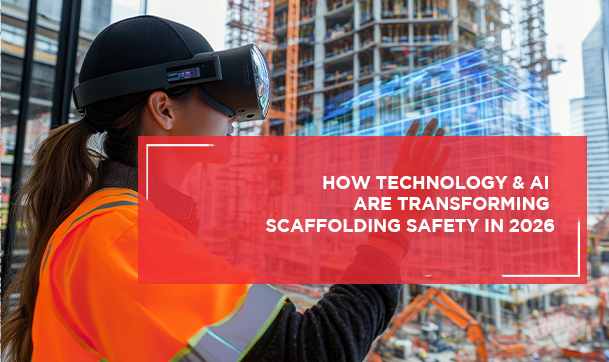
Construction is going through one of the largest technological changes in its history. Conventional methods of construction are changing fast as companies increasingly adopt technology, automation, and smart technologies.
Construction technology is not only revolutionizing how buildings are designed, but also how construction sites work. Advanced technologies such as artificial intelligence, drones, and smart sensors assist the site managers in monitoring their sites and taking appropriate decisions.
One of the important aspects to be considered in construction projects is scaffolding, especially with regards to access and safety. The construction industry has seen tremendous changes in scaffolding with the advent of modern technologies.
As construction projects are becoming bigger and more complex, technology is becoming one of the important factors to improve construction productivity and success.
What Role Does Technology Play in Modern Construction and Scaffolding?
Technology is revolutionizing the construction industry, including scaffolding, by promoting safety, efficiency, and effective planning in construction sites. Building Information Modeling, drones, artificial intelligence, and IoT sensors are some of the technologies that help construction companies create safe construction scaffolding solutions, remotely monitor construction sites, and minimize errors during construction.
Key Industry Statistics
- Technology adoption in the construction industry increases efficiency by 30%
- Building Information Modeling decreases design errors by 40%
- The use of drones in the construction industry has grown by over 200% in the past five years
- Smart scaffolding system safety solutions decrease construction accidents by 20-25%
Key Technologies Transforming Construction Sites Today
Then include a short list:
- Building Information Modeling (BIM)
- Construction drones
- IoT safety sensors
- Artificial intelligence project management
- Robotics and automation
Why Technology Is Essential in Modern Construction
Construction projects today require precise coordination between workers, materials, equipment, and timelines. Without the support of technology, managing these factors can get extremely complicated.
Technology helps construction companies overcome the following challenges.
Key challenges in traditional construction
- Safety risks in high-rise buildings
- Inefficient project planning
- Delays due to improper coordination
- Difficulty in monitoring construction sites
- Higher operational costs
Digital technology can help construction companies overcome the following challenges by offering improved data visibility and real-time communication between the construction project stakeholders.
Benefits of technology adoption
- Improved worker safety
- Shorter construction periods
- Lower operation costs
- Improved planning
- Improved construction quality
These benefits are particularly critical for scaffolding structures, as their stability is of critical importance.
Top Construction Technologies Transforming the Industry
Several innovative technologies are currently reshaping the construction and scaffolding industries.
1. Building Information Modeling (BIM)
Building Information Modeling is one of the most powerful technologies used in modern construction planning.
BIM allows engineers and architects to create 3D digital models of construction projects before actual work begins.
How BIM helps scaffolding planning
- It visualizes the structure of the scaffolding before it is erected
- It helps in the identification of design conflicts
- It helps in the reduction of construction errors
- It helps in the improvement of team collaboration
BIM helps in the accurate designing of the scaffolding, hence the reduction of expensive modifications during the construction process.
2. Drones for Construction Site Monitoring
Drones have become extremely valuable tools on modern construction sites.
They provide aerial images and videos that allow project managers to monitor construction progress and inspect structures safely.
Advantages of drones in scaffolding inspection
- Safer inspections at high elevations
- Faster site surveys
- Real-time project monitoring
- Improved safety compliance
Drones are particularly useful for inspecting large scaffolding systems on high-rise buildings where manual inspections can be risky.
3. Internet of Things (IoT) in Construction
The Internet of Things is facilitating smart construction environments where construction equipment and structural systems are able to communicate with each other.
The IoT sensors that are mounted on the scaffolding structures are able to monitor the structural conditions at all times.
Examples of IoT applications in scaffolding
- Monitoring load capacity
- Detecting structural movement
- Tracking environmental conditions
- Sending real-time safety alerts
These systems are beneficial in ensuring that construction companies are able to prevent accidents on their sites.
4. Artificial Intelligence in Construction Management
The way building projects are run is changing thanks to artificial intelligence.
AI can look at a lot of data and give you information that can help you run the project better.
Applications of AI in construction
- Guessing when projects will be late
- Making the most use of the manpower
- Making safety checks better
- Looking at the hazards of building
For scaffolding, AI can look at the design of the building and suggest the best way to set up the scaffolding system based on the type of building.
5. Robotics and Automation
Automation is gradually entering the construction industry through robotic equipment and automated machinery.
Robotics can perform tasks that are repetitive, physically demanding, or dangerous for workers.
Examples of construction automation
- Robotic bricklaying
- Automated material transportation
- Precision cutting and welding
- Assisted scaffolding assembly
Automation helps reduce labor fatigue while improving accuracy and productivity.
Smart Scaffolding Systems: The Future of Construction Safety
Modern scaffolding structures are becoming smarter with the integration of smart technology.
Smart scaffolding refers to the use of sensors, monitoring systems, and other digital tracking tools that assist in ensuring the safety and structural integrity of scaffolding structures.
Some of the smart features in scaffolding include:
- Real-time monitoring of the structure
- Safety alerts
- Monitoring of load capacity
- Environmental condition monitoring
These are the smart features in scaffolding, which help in identifying any potential problems in the structure and provide solutions before any accidents occur.
Key Benefits of Technology in Construction and Scaffolding
Technology adoption provides several major advantages for construction companies.
1. Improved Safety
This helps to improve safety monitoring and reduce accidents.
2. Higher Productivity
Automated systems and digital planning tools make it possible to complete projects in a timely manner.
3. Better Project Management
This helps to improve monitoring of project development.
4. Reduced Construction Costs
Improved efficiency and reduced errors lead to lower operational expenses.
Construction Technology Trends to Watch in the Future
The construction industry is also expected to change as new technologies are being developed.
Some of the most promising trends are:
Digital Twin Technology
Digital models that let engineers try out how buildings will be built.
Augmented Reality for Construction
AR technologies let workers examine building plans and how scaffolding will be set up right on the job site.
3D Printing in Construction
People are using big 3D printers to build buildings.
Autonomous Construction Equipment
Self-operating machinery that can carry out construction tasks with little human intervention.
These are some of the technologies that will likely transform how buildings are built in the next few years.
How Construction Companies Can Adopt New Technologies
Taking up new technology is a strategic concern.
Construction businesses should consider:
- Investing in new digital technologies
- Implementing smart safety
- Assembling construction management software
- Working with new technology vendors
Businesses that are good at taking up new technology are at the cutting edge and reap significant advantages.
FAQs About Construction Technology
What is construction technology?
Construction technology refers to the digital tools, machines, and systems used to improve building processes, efficiency, and safety.
How is technology improving scaffolding safety?
IoT sensors, drones, and AI monitoring technologies are used for the early detection of problems with structures as well as safety concerns.
What role does BIM play in scaffolding design?
BIM technology enables engineers to create detailed 3D models of the scaffolding, which in turn enables them to detect problems in the design before construction commences.
Are drones commonly used in construction?
Yes. Drones are commonly used for site monitoring, inspection, and tracking.
Comments are closed