


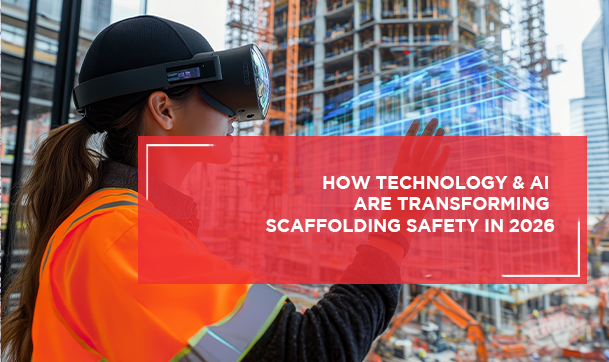
Technological advancements in the industry are being used in a bid to ensure worker safety and increase efficiency at the workplace. One such area where technological advancements have been employed to improve safety is that of scaffolding safety. Artificial Intelligence, sensor technology, and monitoring technology are some of the key ways that safety has been increased.
The use of AI safety technologies, intelligent scaffolding, and monitoring technology will increase in the construction industry by 2026 compared to before.
This article will discuss how technology and artificial intelligence can aid in making the process of scaffolding safer on construction sites.
Why Scaffolding Safety Is Critical in Construction
Scaffold systems are very essential in constructing and in developing infrastructure. Scaffold systems help the construction workers to reach high areas in construction sites but may also be dangerous if they are not well managed.
Some common dangers of scaffolding are:
- Unstable structure
- Things that fall
- Worker falls from a height
- Putting together scaffolding wrong
- Putting too much weight on scaffold platforms
To deal with these problems, the construction sector is using digital safety tools and AI-powered monitoring systems.
Smart Scaffolding Systems in Modern Construction
Smart scaffolding systems have sensors and monitoring equipment that keep an eye on the state of the structure in real time. These systems can find problems like too much weight, movement in the structure, or stress from the environment.
Some of the most important parts of smart scaffolding are:
- Sensors that tell when a scaffold is too heavy
- Finding movement in structures
- Dashboards for monitoring in real time
- Automatic safety warnings for site managers
These technologies help keep structures from failing and make things safer by constantly watching scaffold structures.
AI-Powered Safety Monitoring on Construction Sites
AI is becoming more and more vital for keeping construction sites safe. AI-powered cameras and monitoring systems can look at how workers act and find possible safety problems.
Key AI Safety Applications
| Technology | Function |
| AI Surveillance Cameras | Detect unsafe worker behavior |
| Computer Vision Systems | Monitor PPE compliance |
| Smart Site Monitoring | Track worker movement on scaffolds |
| AI Risk Analysis | Identify potential safety hazards |
These technologies let construction companies find safety problems before they happen.
Wearable Safety Technology for Scaffold Workers
Wearable gear is becoming a key element for making scaffolding platforms safer for workers.
Some examples of safety gadgets that you can wear are:
- Smart helmets that can tell when you fall
- GPS trackers that show where workers are
- Biometric sensors keeping an eye on tired workers
- Smart safety vests that can sense movement
These tools give supervisors real-time safety information and let them keep an eye on how workers are doing on construction sites.
Drones for Scaffolding Inspection
More and more, drones are being used to check scaffolding on big construction projects. When you inspect scaffolding the old-fashioned way, you have to do it by hand, which can take a lot of time and be dangerous.
There are a number of benefits to using drones:
- Faster checking of big scaffold constructions
- High-resolution imaging for analyzing structures
- Less need for personnel to go to unsafe places
- Better records of following safety rules
Contractors can find structural problems early and keep scaffolding safety regulations by using drones.
Robotics and drone technology are enhancing site safety and inspections—read more in our guide on how robots and drones support construction safety.
IoT Sensors for Scaffold Load Monitoring
Scaffolding systems are getting Internet of Things (IoT) sensors that keep an eye on the stability and load distribution of the structure.
These sensors check:
- Weight loading on scaffold platforms
- Movement or vibration of the structure
- Environmental factors like the speed of the wind
The system automatically delivers alerts to site supervisors if a scaffold goes above its safe load limit.
Benefits of AI and Technology in Scaffolding Safety
Safety systems that use technology have a lot of benefits for construction companies.
Key Benefits
- Finding problems with the structure of scaffolding early on
- Less chance of accidents at work
- Better following of safety rules
- Faster checks and monitoring of scaffolding
- More awareness of workplace safety
Construction businesses may make their workplaces much safer by using AI monitoring, IoT sensors, and wearable technologies all together.
Modern construction is evolving with smart tools and automation—explore more in our blog on how technology is transforming construction and scaffolding.
Future of Scaffolding Safety Technology
As technology in building gets better, scaffolding systems will also get better.
Some possible future innovations are:
- Completely automated methods for monitoring scaffolds
- Safety analytics that use AI to make predictions
- Scaffold inspections with the help of robots
- Digital twin models of scaffolding buildings
Construction businesses will be able to make job sites safer and more efficient with these technology.
Conclusion
Artificial intelligence and technology are changing the way construction businesses keep scaffolding safe. Modern technologies, such as smart sensors, wearable gadgets, AI monitoring, and drone inspections, are helping to lower the risks that come with operating at height.
As construction projects get bigger and more complicated, it will be important to use technology-based scaffolding safety solutions to keep workers safe.
Companies who use these new ideas will be better able to improve safety, follow the rules, and make their operations more efficient in the ever-changing construction industry.
Comments are closed