


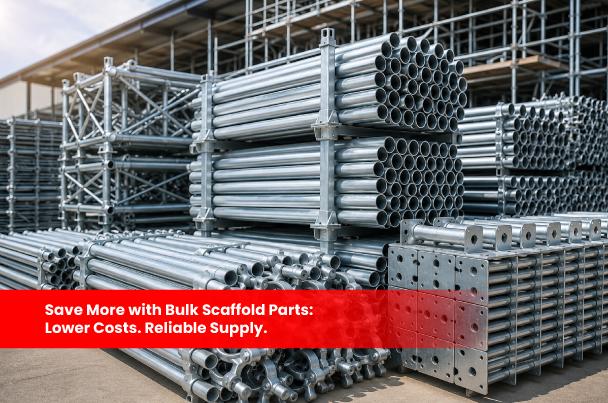
There are many advantages for contractors to buy the bulk scaffolding parts. Some of these advantages are lower material costs, better project scheduling, lower shipping costs and less delays. Companies that buy their bulk scaffold parts before beginning construction can ensure they stay on schedule and don’t need to make emergency purchases.
Every Project Starts with a Purchasing Decision
Picture two contractors, both prepared for similar commercial construction projects.
The first contractor just orders scaffold parts as they are needed. Every few days, they request for more components since they forgot something or the project needs changed. Deliveries aren’t coming at the same time, workers are waiting for missing materials, and transportation cost continues to rise.
The second contractor reviews the project plans, estimates scaffold requirements and purchases most of the scaffold components before work begins.
The outcome? Installation is on schedule, workers remain productive, inventory stays organised and unexpected procurement expenses are reduced.
It’s not only planning, the difference is buying strategy.
For commercial and industrial contractors who have many projects to manage each year, ordering scaffold parts in bulk can become one of the easiest methods to minimise overall project expenses.
Why Procurement Has a Bigger Impact Than Most Contractors Realize
When contractors analyse scaffold expenses, they tend to look exclusively at the purchase price of the equipment.
But the entire cost of acquiring scaffolding is sometimes far higher than just the cost of the product itself.
Other costs may be:
- More than one shipping charges
- Emergency shipments
- Administrative processing
- Equipment downtime
- Labour waiting for materials.
- Last minute sourcing
- Delay in the project
- Shortages of inventory
Eliminating these hidden costs can greatly affect the overall project budget.
7 Ways Bulk Scaffold Parts Purchasing Reduces Project Costs
Successful contractors look at the full financial picture of bulk buying, not just unit prices.
These are the seven ways in which buying scaffold parts in bulk can help in saving money.
1. Lower Cost Per Component
A major advantage of buying in bulk is the reduced average price per scaffold part.
Suppliers can generally handle larger orders more efficiently than a number of small orders.
If you’re a contractor with a steady stream of commercial work, this can help lower your procurement costs on a range of projects.
Savings are particularly obvious when buying regularly used components such as:
- Standards
- Ledgers
- Transom
- Couplers
- Base plates
- Screw jacks
- Platforms
- Guard rails
Small savings per component might add up to a big part in a large project.
2. Reduced Shipping Expenses
Contractors sometimes face higher shipping expenses if they place many minor purchases during the course of a project.
Bulk buying means fewer delivery of materials instead of paying for repeated deliveries.
Benefits are:
- Reduced transportation costs
- Fewer delivery appointments.
- Faster unloading time
- Better coordination of deliveries
Consolidated shipments also make jobsite logistics easier.
3. Fewer Project Delays
Construction schedules are dependant on arrival of materials when they are needed.
The lack of scaffold parts will cause delays to the installation crews in the construction process.
Buying in bulk ensures that scaffold parts that are frequently needed are available even before the construction process starts.
When the right parts are available, there will be less delay in the process.
4. Better Inventory Management
It is considerably easier to manage the inventory of scaffold by anticipating the purchasing plans of builders.
This enables project managers to consolidate inventory under one procurement strategy, instead of maintaining dozens of different orders.
Effective inventory control assists teams in:
- Finding components easily
- Fewer cases of misplaced materials
- Increasing efficiency in the warehouse
- Preparing for future projects
An appropriate inventory system can help in determining the needs for replacements before beginning another project.
5. Fewer Emergency Purchases
When purchases are not planned, they normally cost more than when they are planned.
Typically, emergency orders will have:
- Hasty delivery
- Higher transportation costs
- Limited number of suppliers
- Project down time
Scaffold component procurement in large volumes helps avoid these sudden extra costs.
The construction company continues the work without needing to find other scaffold components mid-way through.
6. Improved Purchasing Efficiency
Each purchase order takes a while to arrive.
The administrative team may have to:
- Get quotations
- Select suppliers
- Approvals secured
- Invoice processing
- Make deliveries
- Maintain stock records
Procurement becomes much easier when many small buys are replaced by one single good buy.
It saves the time of project managers who can concentrate on construction rather than procurement of materials.
7. Better Project Budget Control
Accurate budgeting is essential for large commercial and industrial operations.
Contractors know most of the scaffold costs before construction begins with bulk buying, so material costs become more predictable.
This improves:
- Budgeting & forecasting
- Cash flow planning
- Cost monitoring
- Financial disclosure
Less chance of surprise procurement costs, hence easier to stay to a project’s budget.
Cost Comparison: Bulk Purchasing vs. Multiple Small Orders
The effect of the purchasing strategy on the total cost of the project is shown in the table below.
| Expense Category | Small Orders | Bulk Purchase |
| Shipping Charges | High | Lower |
| Administrative Work | Repeated | Reduced |
| Emergency Orders | More Common | Less Frequent |
| Inventory Planning | Difficult | Easier |
| Material Availability | Inconsistent | Better Prepared |
| Project Delays | Higher Risk | Lower Risk |
| Budget Control | Less Predictable | More Predictable |
Every project is different, but contractors usually find that bulk buying raises the overall efficiency of procurement more than it lowers product prices.
Which Scaffold Parts Are Best Purchased in Bulk?
There are a few scaffold components that are utilised again on practically every commercial and industrial project.
Common bulk purchases include:
- Standards
- Ledgers
- Transoms
- Cross braces
- Base plates
- Adjustable screw jacks
- Couplers
- Locking pin
- Guard rails
- Toe boards
- Platforms
- Scaffolding planks
- Access ladder
- Caster
- Safety equipment
This allows contractors to respond rapidly to new projects by having these components in stock, so they don’t have to wait for additional deliveries.
A Smarter Way to Plan Bulk Purchases
Instead than just ordering off of the present project many contractors look at their expected workload for the next few months.
Some questions to consider are:
- How many commercial initiatives are planned?
- Which parts of the scaffold are used most?
- What parts fail the quickest?
- What goods are routinely re-ordered?
- Is additional warehouse storage available?
- Which scaffold parts to replace?
- Can other projects utilise the same scaffold inventory?
Generally, foresight leads to more efficient purchasing decisions and resource utilization.
When Contractors Should Consider Bulk Purchasing
Bulk buying does not exclusively belong to the big construction enterprises. Bulk buying may also help construction contractors dealing with multiple projects in a year.
Purchasing of scaffold components in bulk quantities may be feasible for:
- Commercial contractors
- Industrial maintenance companies
- Bridge construction companies
- Infrastructure construction companies
- Warehouse construction projects
- Manufacturing facilities
- Plant shutdown projects
- Equipment renting firms
- Scaffold service firms
The greatest benefits can usually be reaped from procurement planning by organizations requiring scaffolds regularly.
How Bulk Purchasing Supports Long-Term Business Growth
Bulk scaffold purchasing is more than simply saving money on today’s project.
It also aids long term operating efficiency.
Some benefits are:
- Faster mobilisation of projects
- Stronger supplier relationships
- More consistent purchasing
- Reduced procurement effort
- Budgeting more accurately
- Better inventory visibility
- Better project schedules
- Efficiency gains across many jobsites
For contractors involved with ongoing commercial and industrial projects, these operational advantages can be as important as savings from direct purchases.
Frequently Asked Questions
What scaffold parts are best suited for bulk purchasing?
Standard components including standards, ledgers, transoms, couplers, braces, base plates, screw jacks, guardrails, platforms and locking pins are frequently acquired in bulk, as they are utilised on most projects. If you want to learn more about couplers, check read our guide scaffold couplers explained.
Does bulk purchasing always reduce costs?
Buying in bulk generally leads to lower total purchasing expenses by means of less shipments, better inventory planning and less administrative effort. However, contractors should acquire just the quantities that they can successfully use and keep.
How can contractors avoid over-ordering?
Examine the project plans, estimate the amount of work that will be done in the future and see what is available from the inventory, and prepare an extensive list of scaffold parts needed.
How should bulk scaffold parts be stored?
Keep the scaffold parts inventory in a clean dry organized place with scaffold racks and storage baskets.
Why is inventory management important after bulk purchasing?
Good inventory management prevents wastage of materials, maximizes warehouse productivity, makes future orders simpler and enables contractors to obtain scaffold parts easily at the time projects are initiated.
Final Takeaways
Buying scaffold parts in bulk is not just about ordering them in large amounts; it is a clever way of cutting down costs and improving efficiency in operations. Contractors who properly organize their purchasing process and inventory are better positioned to meet deadlines and cut down unnecessary costs.
Successful construction teams don’t wait until there is a shortage and then place emergency orders. They anticipate what they will need, keep stock of critical scaffold parts and set up procurement processes that support both current and future projects.
If you’re responsible for a commercial building, industrial facility, bridge or infrastructure project, smart bulk purchasing may help you streamline operations, boost productivity and integrate greater cost certainty into the construction lifecycle.
Contact Scaffolds Supply
Are you planning your next commercial/industrial project? Scaffolds Supply offers a complete line of scaffold parts, replacement parts, safety accessories and storage solutions so you may buy in bulk effectively.
Let our team assist you choose the proper scaffold components, organise larger orders, and ensure you have the resources needed to keep your projects moving without unwanted delays.