


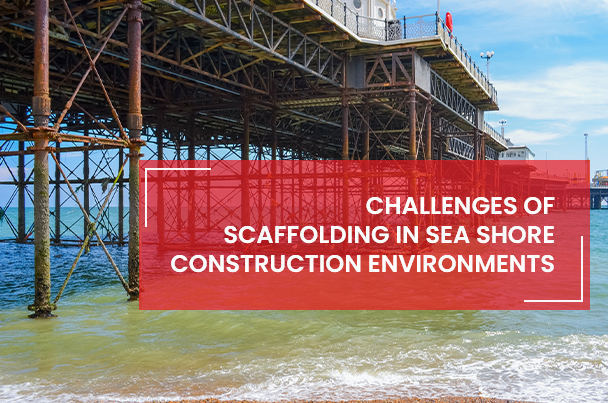
The problem that arises due to construction projects located near the coastline is a difficult one when it comes to scaffolding structures because of their exposure to salt water, heavy coastal winds, unstable ground, and high levels of corrosion. Scaffolding structures used in marine and coastal construction sites need to be specially designed to withstand these environmental hazards.
Introduction
Scaffolding is an important part of all marine and coastal building operations that provide a safe access point for workers to reach elevated structures, waterfront development projects, offshore constructions, bridges and port facilities. Nevertheless, the practical challenges posed by sea coast construction sites may not always be easily overcome by standard scaffolding systems.
Moisture, salt water, coastal wind, and unsteady ground increase the possibilities of corrosion, instability, and failure of the scaffolds. In shoreline construction, contractors require adequate planning and preparation of scaffold designs, materials, and safety measures that would allow for efficient operations in such harsh conditions.
The modern marine scaffolds have been designed in a way that they can withstand harsh environmental conditions.
Why Sea Shore Construction Is Challenging for Scaffolding
Coastal construction conditions are considerably more aggressive than those of normal commercial construction sites.
Main Environmental Challenges
| Challenge | Impact on Scaffolding |
| Saltwater Exposure | Accelerated corrosion |
| Strong Coastal Winds | Structural instability |
| High Humidity | Reduced component lifespan |
| Sandy or Wet Ground | Weak foundation support |
| Tidal Movement | Difficult positioning |
| Limited Site Access | Installation complexity |
Such conditions demand scaffolding solutions that are more durable and corrosion resistant.
Saltwater Corrosion and Scaffold Damage
Saltwater corrosion is one of the main concerns in sea coast development. In the absence of effective measures to protect the scaffolding, the metal parts of the scaffolding will be attacked soon by salt particles in the air and when exposed to sea water.
Effects of Corrosion on Scaffolding
- Rusting process
- Structural weakening
- Decrease in weight-bearing capacity
- Increase in cost of maintenance
- Lifespan reduced
Scaffolding in coastal regions will deteriorate faster in the absence of protective measures against corrosion.
Importance of Galvanized Scaffolding in Coastal Projects
Systems of galvanized scaffolding are often used at sea coast constructions since such systems ensure better protection from corrosion and moisture penetration.
Benefits of Galvanized Scaffolding
| Benefit | Importance |
| Rust Resistance | Longer durability |
| Reduced Maintenance | Lower operating costs |
| Better Outdoor Performance | Suitable for marine projects |
| Extended Lifespan | Improved ROI |
For marine construction projects, long-lasting scaffolding is preferred to be hot-dip galvanized.
Strong Coastal Winds and Scaffold Stability
High wind speeds may occur in coastal zones, which influence the stability of scaffolding and safety of workers.
Strong winds may produce:
- Movement of the scaffold
- Unstable platform
- Threats from objects falling
- Stress on the structure
- increased accident risk
Wind Protection Measures
- Reinforced scaffold support
- Dependable anchoring systems
- Calculations for wind load
- Additional tie down systems
- Routine structural inspections
For near shorelines operations, proper regulation of the wind is required for safe scaffold operations.
Unstable Ground Conditions Near Shorelines
Foundation support for scaffolding is usually a more complicated affair in seaside construction sites because of their unstable or sandy ground.
Common Ground Challenges
| Ground Condition | Risk |
| Loose Sand | Scaffold sinking |
| Wet Soil | Foundation instability |
| Uneven Surfaces | Structural imbalance |
| Tidal Moisture | Reduced ground strength |
Contractors may require additional base plates, strengthened foundations or custom support systems for stability.
Limited Access and Complex Scaffold Installation
Many marine building projects have poor access conditions which increase the complexity of scaffold installation.
Common Access Challenges
- Thin water front strips
- Offshore rigs
- Bridge structures
- Limited access to shorelines
- Movement of restricted equipment
These situations generally need suspended scaffolding systems or modular scaffold layouts to provide safe access for workers.
Scaffold Safety Risks in Marine Construction
Wet surfaces, weather exposure and elevated work areas contribute to many construction safety issues in sea shore environments.
Major Safety Risks
| Safety Risk | Potential Hazard |
| Slippery Platforms | Worker falls |
| Corrosion Damage | Structural failure |
| High Winds | Scaffold instability |
| Poor Visibility | Operational accidents |
| Wet Conditions | Electrical hazards |
Coastal construction requires OSHA-compliant techniques and strict safety inspections.
Importance of Regular Scaffold Inspections
Regular inspection helps prevent major safety hazards through identification of any signs of corrosion or structural weaknesses.
Important Inspection Areas
- Corrosion and rust
- Connections not tight
- Platform stability
- Damage: wind
- base condition support
- Security of guardrails
Marine scaffolding systems are often inspected more frequently than those used in conventional building sites.
Best Scaffolding Systems for Sea Shore Projects
The selection of scaffolding systems is determined by the project needs and the environmental exposure.
Common Marine Scaffolding Systems
| Scaffold Type | Best Application |
| Ringlock Scaffolding | Coastal infrastructure |
| Suspended Scaffolding | Bridge and offshore access |
| Galvanized Scaffolding | Corrosion protection |
| Heavy-Duty Systems | Industrial marine projects |
The right scaffold system is a selection that will boost safety and operational efficiency.
How Contractors Reduce Marine Scaffolding Risks
There are various techniques that construction companies employ to increase scaffold safety in coastal locations.
Risk Reduction Strategies
- Use scaffold components galvanized
- Check everyday
- Install stronger anchor systems.
- Weather conditions monitor
- Use work anti-slip platforms
- Train personnel in marine safety procedures
Proper planning greatly eliminates accidents and delays in operation.
Future Demand for Marine and Coastal Scaffolding
Demand for coastal scaffolding systems is increasing due to:
- Projects for the expansion of ports
- Development of offshore energy
- Waterfront infrastructure expansion
- Building of coastal bridges
- Marine industrial projects
As the world’s shoreline development accelerates, contractors want more robust and corrosion resistant scaffolding systems.
Why the Right Scaffolding Matters for Coastal Projects
Scaffolding systems encounter substantial obstacles in sea coast building sites due to corrosion, unstable surfaces, severe winds and challenging access circumstances. Marine Construction Scaffolding, Scaffolding for marine construction projects is specialized scaffolding that is designed to survive harsh environmental conditions while at the same time providing safety for workers and structural stability.
Galvanized scaffolding, reinforcement of support structures, regular inspection, and safe scaffolding practices can contribute towards improved durability and reduced maintenance costs.
The correct maritime scaffolding system is vital for the safety and success of coastal building operations.
FAQs
Why is scaffolding challenging in sea shore construction?
Saltwater corrosion, high winds, unstable surfaces and high humidity all are conditions that sea shore environments expose scaffolding systems to, increasing safety and maintenance issues.
Why is galvanized scaffolding preferred for coastal projects?
Galvanized scaffolding provides higher rust resistance and longer life in maritime and humid conditions.
How do strong winds affect scaffolding?
Winds from the coast have been known to make scaffolds unstable and place additional strain on the structures as well as pose safety threats to workers.
What is the best scaffolding system for marine construction?
Galvanized scaffold system and ringlock scaffolding is normally preferred because of the strength, flexibility and durability against corrosion that they possess.
Why are scaffold inspections important in marine projects?
Inspections are necessary to help identify corrosion, structural problems and possible safety hazards that may cause accidents.
Comments are closed